About RTD Sensor
RTD Sensor is employed in many sectors to carry out the crucial duty of temperature detection. RTDs have demonstrated to be among of the most precise temperature measuring tools available. When measuring accuracy and stability is crucial, these devices are helpful. It is used in sensors to measure the intake of air temperature, oil level, and engine temperature in automobiles. We offer RTD Sensor at an affordable price in the market. To order it, kindly send us an enquiry.
| Accuracy |
Class A |
| Application |
Industrial |
| Probe Material |
Stainless Steel |
| Probe Diameter |
0.5 - 8 mm |
| Cable Length |
1 m |
| IP Rating |
IP 65, IP 67 |
| Power Supply |
DC Supply |
| Input Voltage |
12- 24 V |
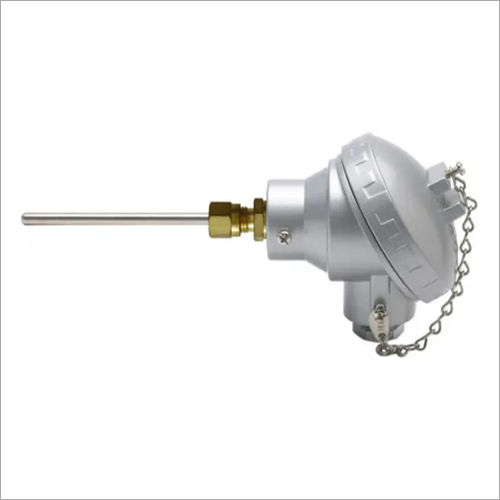
Customizable for Diverse ApplicationsDesigned to cater to multiple industries, this RTD sensor can be customized in terms of probe diameter, cable length, and compression fittings. Whether you need it for laboratory use or demanding industrial environments, specifications can be adjusted for an optimal fit. The sensor is ideal for air, liquid, or gas temperature monitoring, delivering reliable and repeatable data in HVAC, chemical processing, power generation, and more.
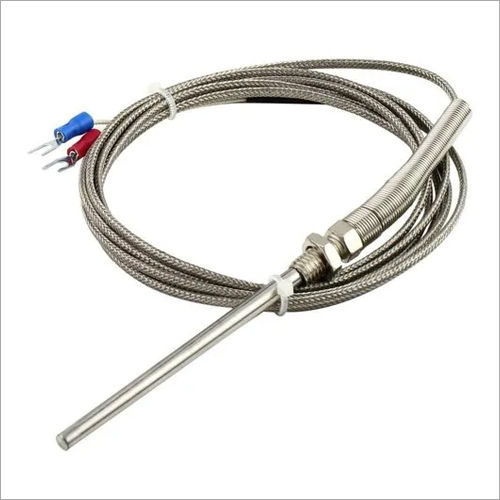
Robust, Reliable, and SafeWith a stainless steel probe and a braided cable sheath, the sensor resists mechanical damage and vibration. Its lead insulation, made from durable fiberglass or Teflon, and ingress protection (IP65) further enhance safety and longevity. Whether threaded, immersed, or mounted, the stainless steel housing ensures robust performance even in harsh environments.
Precise and Flexible ConnectionsThe sensor employs a PT100 element with high sensitivity (~0.385C/) and Class A accuracy, ensuring true temperature representation over its -50C to +250C range. It features an analog signal output (resistance), accommodating standard 2, 3, or 4-wire configurations. Fast response time (1-3 seconds in liquids) and flexible, color-coded leads (IEC/DIN) simplify integration into your process.
FAQ's of RTD Sensor:
Q: How is the RTD sensor best installed for accurate temperature measurement?
A: For optimal performance, mount the sensor using the adjustable compression fitting (standard: 1/4 NPT thread) to ensure firm contact with the medium-air, liquid, or gas. Immersion depth and stable positioning, aided by the rugged stainless steel probe and braided cable, help maintain accuracy and response time.
Q: What customization options are available for this RTD sensor?
A: You can customize the probe diameter (from 3mm to 8mm), cable length, insulation material (fiberglass or Teflon), and fitting type according to your application. The sensor also allows selection between IEC or DIN calibration standards and various color-coded wire schemes to ensure compatibility with your system.
Q: When should I choose fiberglass versus Teflon insulation for the sensor leads?
A: Opt for fiberglass insulation for high-temperature environments and enhanced durability, particularly in industrial settings. Select Teflon insulation if you require superior chemical resistance or when operating with aggressive substances, ensuring reliable performance in specific process conditions.
Q: Where can this RTD sensor be used?
A: This sensor is versatile and suitable for use in process automation, HVAC systems, laboratory measurements, food and beverage industries, chemical processing, and power generation. Its vibration resistance and IP65-rated protection make it reliable for both indoor and outdoor, harsh, or high-moisture locations.
Q: What benefits does stainless steel braided cable provide?
A: The stainless steel braided cable greatly improves mechanical protection against physical abrasion and vibration during installation or operation. It also extends the sensor's service life, particularly in challenging industrial environments, ensuring consistent signal integrity and reliable temperature measurement.
Q: How does the RTD sensor ensure measurement accuracy?
A: The sensor employs a PT100 element with Class A accuracy and adheres to IEC 60751 or DIN EN 60751 standards. Rugged assembly, precise calibration, flexible wiring options (2/3/4-wire), and fast response support high-precision temperature readings across its operating range.








 Send Inquiry

 Send Inquiry
 Send Inquiry
 Send SMS
 Call Me Free


 English
 Spanish
 French
 German
 Italian
 Chinese (Simplified)
 Japanese
 Korean
 Arabic
 Portuguese