About PT 100 Temperature sensor
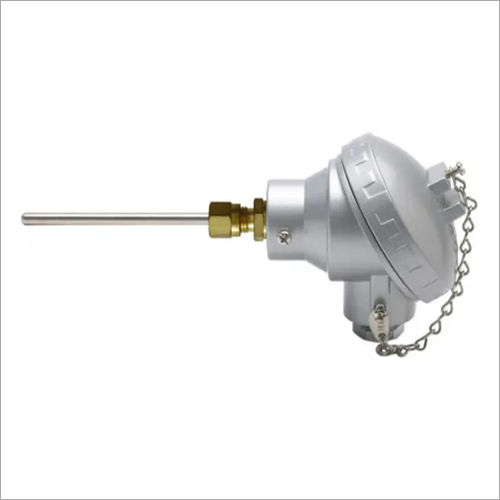
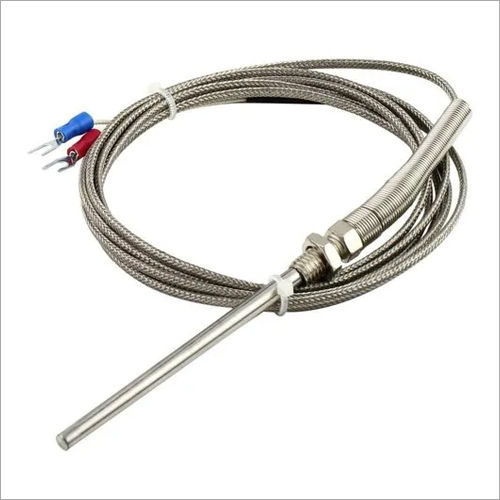
PT 100 Temperature sensor is a piece of technology that records, monitors, or signals temperature changes by sensing the environment's temperature and converting it into digital information. It delivers a legible temperature reading in the form of an electrical signal. This is positioned behind the front bumper, while some cars also have a compartment in the door mirror, behind the glass. The air conditioning system uses it to calculate air density since the system will not work if the outside air is too cold.
| Temperature Range |
-200 to 600 deg C |
| Application |
Laboratory |
| Wire Type |
4 Wire |
| Accuracy |
Class A |
| RTD Element Material |
Platinum |
Customizable Temperature Sensing SolutionsTailor fit your PT100 Temperature Sensor to every industrial need with multiple element choices, an array of sheath diameters, and adjustable sheath lengths. This sensor adapts perfectly to automotive, laboratory, and heavy machinery requirements, ensuring reliable performance across diverse sectors. With compatibility for custom mounting threads and cable lengths, setup is always flexible.
Designed for Industrial ReliabilityEngineered with rugged stainless steel or aluminium housing and a weatherproof head, this RTD sensor withstands harsh environments. Its IP65/IP66 rating assures dependable protection against dust and moisture, while resilient compression fittings ensure secure installation even under demanding process conditions. The sensor's passive design suits high-temperature and corrosive environments encountered in industrial processes.
Accurate and Efficient PerformanceWith a measurement accuracy compliant to IEC 60751 (Class A/B), the PT100 sensor delivers precise temperature readings with a resolution of 0.1C, and fast response times (<10 seconds in moving fluid). Its analog resistive output ensures compatibility with a wide range of process control and monitoring systems, providing dependable data for process optimization.
FAQ's of PT 100 Temperature sensor:
Q: How does the PT100 temperature sensor measure temperature?
A: The PT100 operates as a Resistance Temperature Detector (RTD), where its resistance changes predictably with temperature. At 0C, it exhibits a resistance of 100 ohms. As temperature fluctuates, the sensor's resistance varies, which is interpreted by the monitoring device to reflect accurate temperature values.
Q: What options are available for sheath diameter, element type, and mounting?
A: This sensor offers single or dual element configurations, with sheath diameters of 6 mm, 8 mm, or 10 mm. Custom diameters and mounting threads (including 1/2 NPT) are also available, making it suitable for a range of installation and process requirements.
Q: Where is the PT100 sensor commonly used?
A: PT100 temperature sensors are widely used in industrial settings such as factories, laboratories, power plants, and machinery. Its robust housing and weatherproof design enable safe deployment outdoors or in environments exposed to dust, moisture, or vibration.
Q: What is the benefit of 2-wire, 3-wire, or 4-wire connections?
A: Different wiring types compensate for lead wire resistance. The 2-wire connection is simplest, while 3-wire and 4-wire setups provide improved accuracy by minimizing errors from the resistance of the connecting wires, which is especially beneficial in precise industrial applications.
Q: How is this sensor installed and connected?
A: Installation is streamlined via adjustable compression fittings for secure mounting. The sensor features a terminal block inside the head for wiring connections, and a cable gland (nickel-plated brass or stainless steel) ensures environmental sealing. Cable lengths are customizable to application needs.
Q: What makes this sensor suitable for harsh industrial environments?
A: Constructed from stainless steel or diecast aluminium, and rated at IP65/IP66, the PT100 sensor resists dust, moisture, and mechanical stress. Its weatherproof head and rugged design guarantee durability in challenging industrial or outdoor scenarios.








 Send Inquiry

 Send Inquiry
 Send Inquiry
 Send SMS
 Call Me Free


 English
 Spanish
 French
 German
 Italian
 Chinese (Simplified)
 Japanese
 Korean
 Arabic
 Portuguese