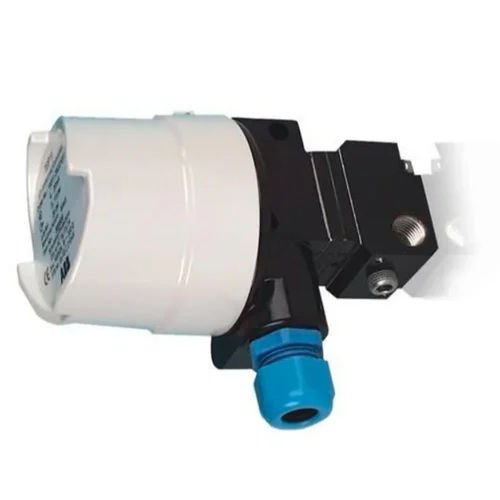
About I P Converter
The I/P (Current-to-Pressure) converter is a high-precision device designed to convert an electrical current signal into a proportional pneumatic pressure output. It typically accepts an input current signal, such as 4-20 mA, and translates it into a corresponding pneumatic pressure, usually within a range of 3-15 psi or 0-100 psi. This conversion enables the control of pneumatic actuators, valves, or other process equipment with accurate pressure regulation.
The I/P converter features a robust and durable construction, built to endure harsh industrial environments and maintain reliable performance over time. It often includes adjustable output settings for fine-tuning pressure ranges and ensuring compatibility with various applications. Additional functionalities may include easy calibration, high accuracy, and built-in diagnostics for monitoring performance and detecting faults.
Designed for integration into process control systems, the I/P converter facilitates precise control and automation in industries such as manufacturing, chemical processing, and energy production. Its ability to deliver stable and accurate pressure outputs makes it an essential component for optimizing process control and enhancing operational efficiency.
| Transducer Type |
I/P |
| Linearity Error |
0.25% |
| Voltage |
24 V DC |
| Usage/Application |
Industrial |
| Material |
Stainless Steel |
| Ambient Temperature |
-40 deg C to 85 deg C |
| Input Current |
4-20 mA |
| IP Rating |
IP 20 |
Reliable Performance in Extreme ConditionsEngineered to withstand temperatures from -40C to 85C, our I/P Converter suits both cold and hot industrial environments. The rugged stainless steel construction resists corrosion and mechanical wear, ensuring long-term reliability even in demanding settings. Its dual-color design enhances visibility, making maintenance and operation more convenient.
Precision Conversion for AutomationThis I/P Converter accurately translates electrical signals to pneumatic outputs, vital for automated process control in various industries. Operating on a 24V DC supply, it delivers consistent and stable performance, supporting critical applications in manufacturing plants, oil & gas, and other industrial sectors.
FAQ's of I P Converter:
Q: How does the I/P Converter function in industrial automation systems?
A: The I/P Converter transforms electrical (current) signals into proportional pneumatic (pressure) outputs, facilitating accurate control of actuators and valves in automated processes. This conversion ensures seamless communication between electronic controllers and pneumatic equipment.
Q: What are the primary benefits of using a stainless steel I/P Converter?
A: A stainless steel body provides superior resistance to corrosion, chemicals, and physical stress. This ensures the converter's longevity, consistent performance, and low maintenance requirements, especially in tough industrial environments.
Q: When should you use an I/P Converter in your application?
A: An I/P Converter is ideal when you need to bridge electrical control systems with pneumatic actuators, particularly in process industries like chemical plants, manufacturing units, or oil and gas refineries where automated valve control is essential.
Q: Where can this I/P Converter be installed for best performance?
A: This converter is designed for installation in industrial settings where environmental conditions require robust equipment. It can be mounted on control panels, near actuators, or within field environments, owing to its wide operating temperature range and durable material.
Q: What is the process for integrating the I/P Converter into an existing system?
A: Integration involves connecting the electrical input terminals to a 24V DC control signal and pneumatic output to the actuator or control valve. Proper setup ensures accurate signal conversion and enhances overall system efficiency.
Q: How does the operating temperature range benefit industrial users?
A: With an operating range from -40C to 85C, this I/P Converter functions reliably in both freezing and high-temperature conditions. This flexibility supports uninterrupted operation across diverse industrial sites, from cold storage facilities to high-heat manufacturing environments.







 Send Inquiry

 Send Inquiry
 Send Inquiry
 Send SMS
 Call Me Free


 English
 Spanish
 French
 German
 Italian
 Chinese (Simplified)
 Japanese
 Korean
 Arabic
 Portuguese