About Ultrasonic Liquid Level Sensor
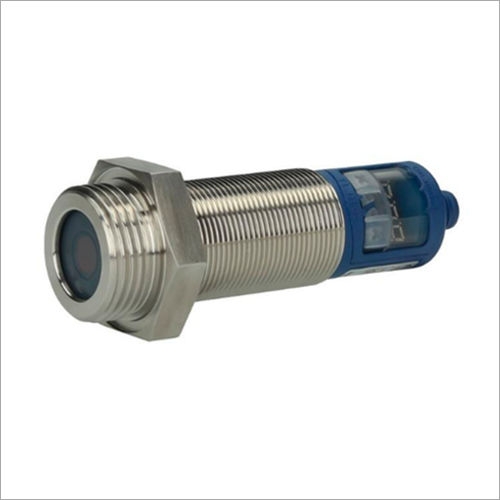
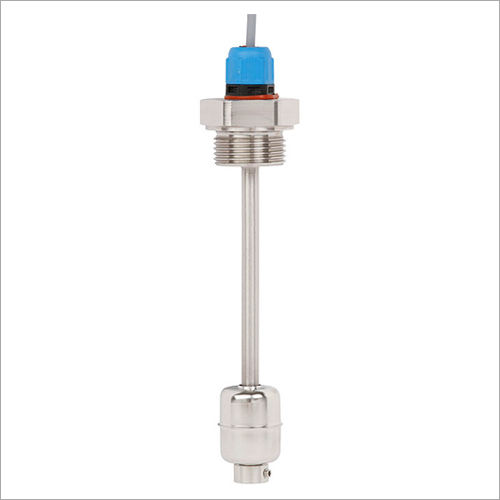
Ultrasonic Liquid Level Sensor is a highly active inline type semiconductor based device that is commonly used in low to high pressure flow systems to determine liquid levels. It is designed and developed as per the engineering standards that make it highly durable in construction and accurate in operation. The offered Ultrasonic Liquid Level Sensor can be delivered to our customers as per their demands with an assurance of fast and safe delivery at a reasonable price range.
| bient Temperature |
- 25 to 75 Deg C |
| Connection |
M12 Connector |
| Housing Material |
Stainless Steel |
| Output Current |
4-20 mA |
| Output Voltage |
0-10 V |
| Protection rating |
IP67 |
Non-Contact Liquid Level MeasurementUtilizing ultrasonic technology, this sensor measures liquid levels without direct contact, reducing contamination risk and wear. Its robust build and nickel-plated, stainless steel housing ensure durability even in chemically aggressive environments. The beam angle of less than 10 delivers precise readings in diverse container shapes and sizes.
Industrial-Grade Reliability and VersatilityCompliant with international standards for electromagnetic compatibility and mechanical resilience, this sensor is suited for demanding industrial applications. With built-in supply reverse polarity protection, shock, and vibration resistance, it ensures operational safety and dependability across a wide range of industries.
Easy Installation and OperationThe sensor features threaded mounting (M18 x 1.5), a 2-meter PVC-insulated cable, and a standard M12 connector for flexible setup. Configuration is simple with a teach-in push button, allowing quick adaptation to different tank sizes and operational conditions.
FAQ's of Ultrasonic Liquid Level Sensor:
Q: How does the ultrasonic liquid level sensor measure liquid levels without contacting the fluid?
A: The sensor emits ultrasonic pulses from its transducer; these waves bounce off the liquid surface and return to the sensor. By calculating the time it takes for the echo to return, the sensor determines the liquid level, ensuring accurate, non-contact measurement that avoids contamination or mechanical wear.
Q: What environments are ideal for using this sensor?
A: The sensor is especially suitable for industrial settings such as water treatment plants, chemical process industries, and general tank level monitoring. Its stainless steel housing and high chemical resistance allow it to function reliably in aggressive or humid environments, and it is designed to operate within a temperature range of -20C to +70C.
Q: When should the teach-in push button be used during installation?
A: The teach-in push button should be used during the initial setup or when the measurement container or fluid type changes. By pressing the button, you enable the sensor to automatically calibrate itself for optimal level detection according to the specific tank dimensions and application requirements.
Q: Where should the sensor be mounted for optimal performance?
A: For best results, mount the sensor vertically at the top of the tank or container using its threaded M18 x 1.5 mount. Ensure the beam path is unobstructed, and avoid placing the sensor near tank walls or internal fixtures, which could cause signal reflection errors.
Q: What makes this level sensor reliable for automated monitoring?
A: The built-in self-diagnosis function continuously monitors the sensor's operational status, ensuring reliable outputs. Its compliance with shock, vibration, and electromagnetic immunity standards (IEC and EN certified) also contributes to uninterrupted, accurate measurement in harsh industrial environments.
Q: How do the analog and switch outputs contribute to process integration?
A: The sensor offers both 4-20mA/0-10V analog outputs for continuous level monitoring and PNP/NPN switch outputs for discrete level detection or alarm triggering. This dual output capability allows integration into various control systems, enhancing process automation and flexibility for different industrial applications.
Q: What benefits does the high sensitivity and rapid response time provide?
A: With a sensitivity that enables detection of minute changes (1 mm resolution) and a quick response time of 100 ms, the sensor delivers real-time liquid level information. This ensures quick reactions in automated processes, minimizing risks of overflow or equipment damage.








 Send Inquiry

 Send Inquiry
 Send Inquiry
 Send SMS
 Call Me Free


 English
 Spanish
 French
 German
 Italian
 Chinese (Simplified)
 Japanese
 Korean
 Arabic
 Portuguese