About Temperature Sensor Transmitter
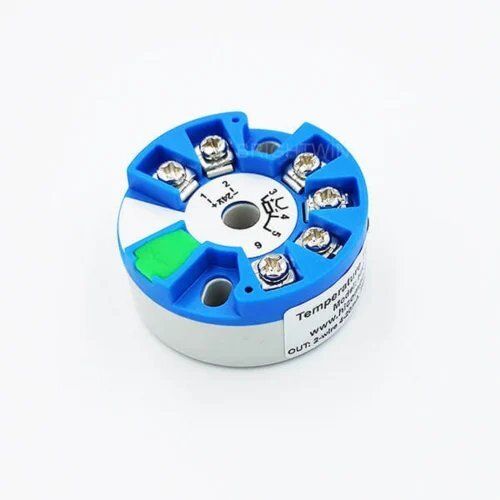
The temperature sensor transmitter is a sophisticated device designed to provide accurate and reliable temperature measurements by converting the output from temperature sensors, such as thermocouples or RTDs, into standardized electronic signals. Encased in a rugged, weather-resistant housing, this transmitter is engineered to operate effectively in harsh industrial environments, with features that enhance durability and longevity.
The transmitter offers precise signal conversion, translating sensor data into widely used output formats such as 4-20 mA, HART, or digital protocols, ensuring seamless integration with control systems and data acquisition networks. It typically includes user-friendly calibration and configuration options, allowing for tailored adjustments to match specific measurement needs and temperature ranges.
Advanced models may provide additional functionalities like remote configuration, diagnostics, and alarm settings, facilitating proactive monitoring and maintenance. Designed for ease of installation, the temperature sensor transmitter supports accurate temperature control and monitoring across diverse applications, from manufacturing and process industries to environmental and laboratory settings.
| Power |
15V to 30VDC (24VDC) |
| Accuracy |
+/-0.2% of Span |
| Model Name/Number |
ZT701 |
| Brand |
Ztech |
| Weight |
100gms. approx. |
| Dimension |
Din Rail 25(W)*75(H)*110(D) mm, Head Mount 43mm (Diam.)*30mm (H) |
| Enclosure |
Head Mount, Din Rail Mount |
| Input |
Thermocouple, RTD (Universal Input) (All Parameter setting/calibration through communicator) |
Versatile Applications Across IndustriesThis digital temperature transmitter integrates seamlessly into multiple industrial settings. Its adaptable design supports various applications, from process monitoring in factories to environmental control in commercial spaces. Combining ease of installation with dependable accuracy, it elevates temperature management in any operational environment.
Precision in a Compact FormEngineered with advanced temperature controller theory, the sensor offers precise digital measurement within a small footprint (25*75*110 mm). Its black, robust housing protects sensitive components, ensuring reliability and longevity. Its size also simplifies integration into existing panels and systems.
FAQ's of Temperature Sensor Transmitter:
Q: How can the temperature sensor transmitter be installed and connected in a system?
A: The temperature sensor transmitter is designed for straightforward panel or surface mounting. Its compact dimensions allow for easy placement, and connection is made using standard wiring compatible with 15V to 30VDC power sources, ensuring quick setup.
Q: What are the main uses of this flexible digital thermometer?
A: This digital thermometer is primarily used for continuous temperature monitoring and control in industrial, commercial, and laboratory environments, where precise and reliable data are essential for safety and process optimization.
Q: When should this temperature sensor transmitter be used over traditional analog thermometers?
A: Use this transmitter when digital accuracy, remote monitoring, or integration with automated control systems are required. Its digital output and control features make it superior for modern applications compared to analog alternatives.
Q: Where is this product commonly utilized in India?
A: The transmitter is commonly deployed in manufacturing facilities, process industries, laboratories, and HVAC systems across India, especially in sectors needing robust temperature management solutions.
Q: What is the process for calibration and maintenance of the sensor transmitter?
A: Regular calibration is recommended, following the manufacturer's protocols, to ensure accuracy. Maintenance typically involves keeping the sensor clean and checking for secure electrical connections, minimizing any risk of drift or error.
Q: How does this device benefit users compared to other temperature sensors?
A: This transmitter provides enhanced measurement precision, flexible power compatibility, and a durable compact design, offering longevity and reduced maintenance costs, which benefits users by improving operational efficiency and reliability.








 Send Inquiry

 Send Inquiry
 Send Inquiry
 Send SMS
 Call Me Free


 English
 Spanish
 French
 German
 Italian
 Chinese (Simplified)
 Japanese
 Korean
 Arabic
 Portuguese